Paediatric Thoracic Conditions and Treatments
Paediatric thoracic conditions can affect a child’s lungs, chest, oesophagus and breathing. Some conditions may improve with medicines and monitoring, while others may need surgery. At Laparoscopy.my, Dr Nada Sudhakaran provides specialist care for children with thoracic conditions, with a special interest in minimally invasive laparoscopic and thoracoscopic surgery.
Talk to Dr Nada About Your Child’s Condition!
Paediatric Thoracic Surgery in Malaysia
Paediatric thoracic surgery treats conditions affecting the chest and organs inside it, including the lungs and oesophagus. Every child is different, so treatment depends on the diagnosis, symptoms, age, and overall health.
When surgery is needed, thoracoscopic surgery may be an option for some children. The most suitable treatment is decided after a proper assessment.
Paediatric Thoracic Conditions
Children can have different types of thoracic conditions. Some are present from birth, while others may develop because of infections or other medical problems.
Lung Infection and Empyema
A lung infection such as pneumonia can sometimes cause fluid to collect around the lung. This is called a parapneumonic effusion. If the fluid becomes infected and contains pus, it is known as an empyema.
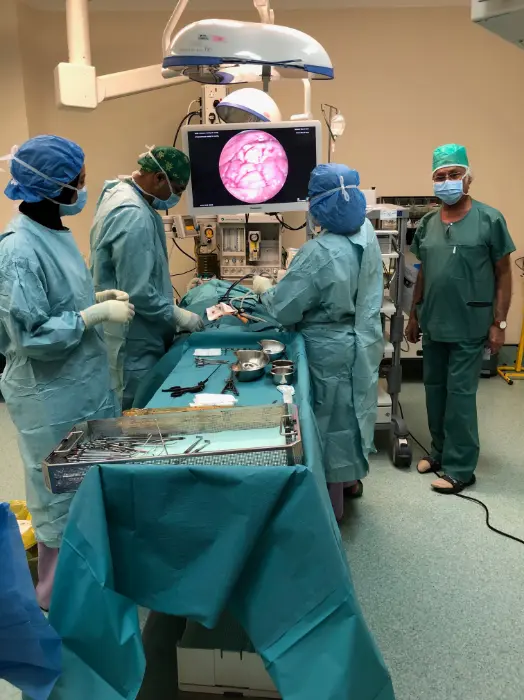
Treatment may include antibiotics and other medical care. If the infection does not improve, a procedure may be needed to remove the infected fluid. In selected cases, video-assisted thoracoscopic surgery (VATS) can be used through small incisions.
Congenital Lung Conditions
Some children are born with abnormalities in their lungs. These may include congenital pulmonary airway malformation (CPAM), congenital lobar emphysema, and pulmonary sequestration.
Some children may only need monitoring, while others may require surgery. If surgery is needed, the affected part of the lung may be removed. Thoracoscopic surgery may be suitable for selected children.
Oesophageal Conditions
The oesophagus carries food from the mouth to the stomach. Conditions affecting the oesophagus can sometimes cause problems with eating or swallowing.
Examples include oesophageal strictures and duplication cysts. Treatment depends on the child’s condition and may include monitoring, endoscopic treatment or surgery.
01
Chest Wall Deformities
Chest wall deformities can change the shape of a child’s chest. Common conditions include pectus excavatum, where the chest appears sunken, and pectus carinatum, where the chest pushes outward.
Not every child needs surgery. A specialist assessment can help determine whether monitoring, non-surgical treatment or surgery is appropriate.
02
Gastro-Oesophageal Reflux Disease
Gastro-oesophageal reflux disease (GORD or GERD) happens when stomach contents flow back into the oesophagus.
Many children can be treated with medicines and other non-surgical measures. If severe reflux continues despite treatment, surgery may be considered in selected cases. Laparoscopic fundoplication is one possible surgical treatment.
03
Hyperhidrosis
Hyperhidrosis means excessive sweating. It can affect areas such as the hands and may interfere with a child’s daily activities.
Treatment depends on the severity of the problem. If other treatments do not help, thoracoscopic surgery may be considered for selected children.
04
Thoracoscopic Surgery for Children
Thoracoscopic surgery is a keyhole technique used to treat selected conditions inside the chest. A small camera and specialised instruments are inserted through small incisions.
It may be used for certain lung and other thoracic conditions. However, it is not suitable for every child. The surgeon will assess the child’s condition before recommending the most appropriate approach.
Minimally Invasive Paediatric Surgery
Minimally invasive surgery uses small incisions to access the area being treated. Laparoscopic surgery is generally used for conditions involving the abdomen, while thoracoscopic surgery is used for selected conditions affecting the chest.
Dr Nada has a special interest in minimally invasive surgery for children. The decision to use a keyhole approach depends on the child’s condition and overall health.
How Is Treatment Decided for Your Child?
Every child needs an individual treatment plan. During a consultation, Dr Nada can review your child’s symptoms, medical history, scans, and other test results.
Parents can then understand the diagnosis, whether surgery is needed, and which treatment options may be suitable.
Meet Dr Nada Sudhakaran
Dr Nada Sudhakaran is a Consultant Paediatric Surgeon & Urologist practising in Malaysia. He has specialist training in paediatric surgery and a special interest in laparoscopic and thoracoscopic surgery for children.
His experience includes general paediatric surgery, paediatric urology, reconstructive surgery and minimally invasive procedures. He works with families to understand their child’s condition and discuss suitable treatment options.
Frequently Asked Questions
Paediatric thoracic conditions affect the chest, lungs, oesophagus or related structures in children. Some are present from birth, while others develop during childhood.
Thoracoscopic surgery is a minimally invasive keyhole procedure used to access and treat selected conditions inside the chest.
Yes. Some lung conditions may require surgery, while others can be monitored or treated without an operation. The decision depends on the child's condition.
In suitable cases, intussusception may be treated using an air or fluid enema. Surgery may be required if the treatment is unsuccessful or if complications are present.
CPAM, or congenital pulmonary airway malformation, is a congenital lung condition. Some children may require surgery, depending on their symptoms and condition.
In some cases, pneumonia can cause infected fluid or pus to collect around the lung. If medical treatment is not enough, a procedure such as VATS may be considered.

Discuss Your Child’s Thoracic Condition
If your child has a thoracic condition or has been advised to consider surgery, speak with Dr Nada Sudhakaran to understand the diagnosis and available treatment options.
Contact Us To Arrange A Consultation And Discuss Your Child’s Condition.