
Acute Emergency Conditions & Treatment in Kuala Lumpur, Selangor & Malaysia
Laparoscopy.my provides specialist paediatric surgical care for newborns, infants, children and teenagers, with treatment planned around each child’s condition and individual needs. Led by Dr Nada Sudhakaran, Consultant Paediatric Surgeon & Urologist, the practice provides care across paediatric emergency surgery, neonatal surgery, planned surgery, childhood tumours, thoracic conditions and paediatric urology. Dr Nada also has a special interest in laparoscopic and minimally invasive keyhole surgery for children.
Acute Emergency Conditions in Children
Acute surgical conditions in children can affect different parts of the body and may develop suddenly. These conditions can include appendicitis, intussusception, bowel obstruction, malrotation and volvulus, Meckel’s diverticulum, acute scrotal conditions, complicated hernias, abscesses, foreign body ingestion and selected trauma injuries.
Prompt assessment helps determine the underlying cause and whether observation, medical treatment, a procedure or surgery is required. The urgency of treatment depends on the child’s symptoms, examination findings and diagnosis.
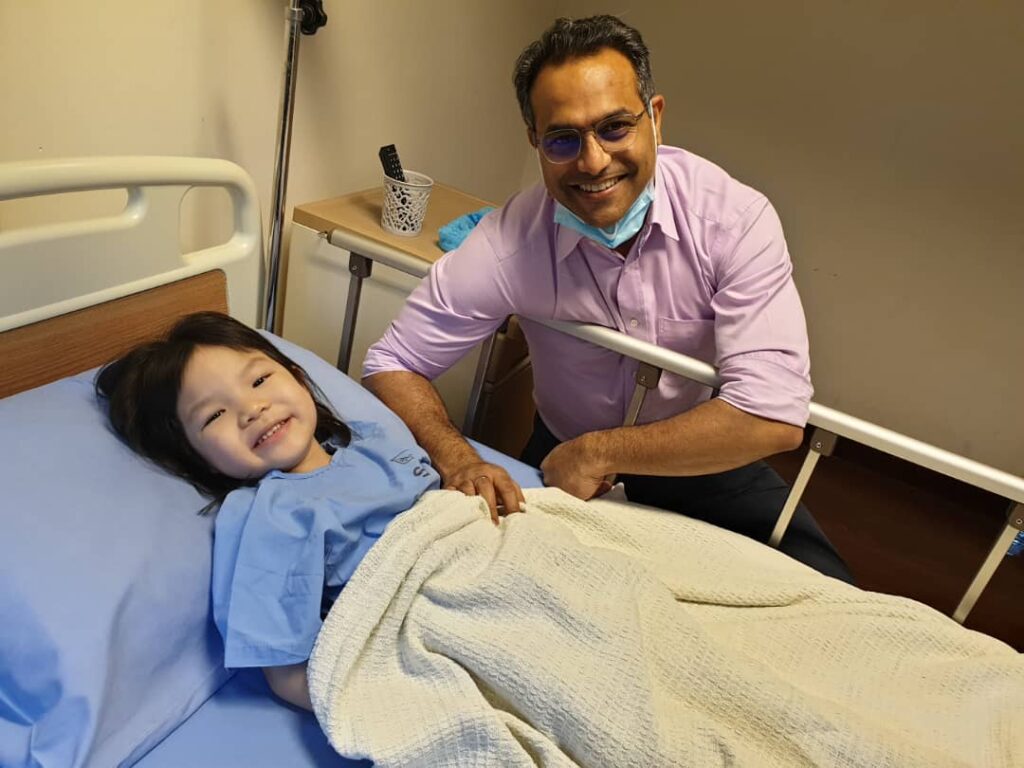
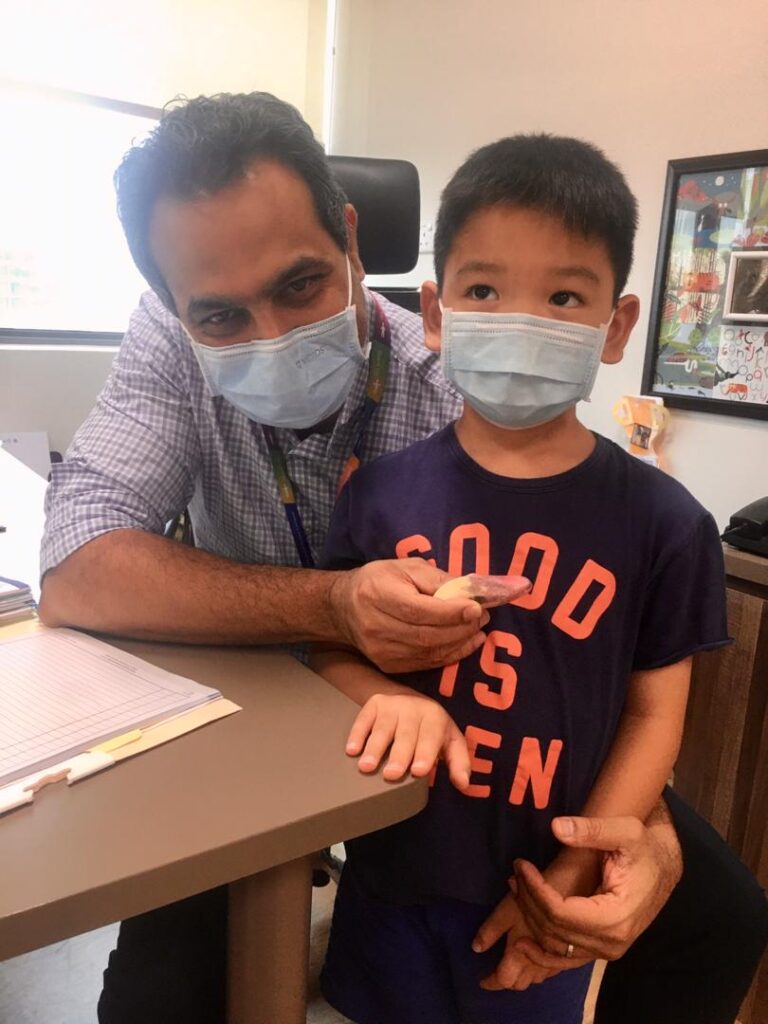
Appendicitis in Children
Appendicitis occurs when the appendix becomes inflamed. It is an acute abdominal condition that requires prompt assessment when suspected. Treatment depends on the clinical findings and may involve non-surgical management or surgery.
Appendicitis Signs and Symptoms
Symptoms of appendicitis can vary between children. Common symptoms may include tummy pain, loss of appetite, nausea, vomiting and fever. Pain may begin around the abdomen and later become more noticeable in the lower right side, although this pattern does not occur in every child. Younger children may have difficulty explaining where or how they feel pain. Changes in appetite, activity, behaviour or general wellbeing may also be relevant when assessing possible appendicitis.
Diagnosis of Appendicitis
Assessment may include a medical history and physical examination, together with investigations such as blood tests, urine tests and abdominal ultrasound. Other imaging may be considered where clinically indicated.
The diagnosis is based on the overall clinical findings rather than a single test.
Laparoscopic Appendicectomy
A laparoscopic appendicectomy removes the inflamed appendix using a camera and specialised surgical instruments inserted through small abdominal incisions.
Laparoscopic appendicectomy may be considered for suitable children when surgery is required. The choice between laparoscopic and open surgery depends on factors such as the severity of inflammation, complications, previous abdominal surgery and the child’s overall clinical condition.
Recovery After Appendicectomy
Recovery varies according to the severity of appendicitis, the type of surgery performed and whether complications are present. Following treatment, the child may require monitoring, wound care, dietary guidance, activity restrictions and follow-up based on their individual recovery.
01
Intussusception
Intussusception occurs when one part of the intestine slides into another part of the bowel. This can cause bowel obstruction and may compromise the blood supply to the affected section of bowel.
Children may develop intermittent tummy pain, vomiting, lethargy or changes in bowel movements. Assessment commonly includes clinical examination and abdominal ultrasound.
In suitable cases, an air or fluid enema may be used to treat intussusception. Surgery may be required if the enema is unsuccessful or if complications are present.
02
Bowel Obstruction, Malrotation and Meckel’s Diverticulum
Bowel obstruction can prevent the normal movement of food and intestinal contents through the digestive tract. Children may develop tummy pain, vomiting, abdominal swelling or changes in bowel movements. Treatment depends on the underlying cause and severity.
Some cases may be managed with observation, intravenous fluids and other non-surgical treatment, while others may require an operation.
Malrotation and volvulus can cause twisting of the intestine and may compromise its blood supply. This can require urgent surgical treatment and prompt medical assessment.
Meckel’s diverticulum is a pouch arising from the small intestine that may sometimes cause abdominal pain, gastrointestinal bleeding or bowel obstruction. Symptomatic cases may require surgical treatment depending on the clinical findings.
03
Acute Scrotal and Foreskin Conditions
Sudden scrotal pain or swelling in a child requires prompt medical assessment. Testicular torsion can interrupt the blood supply to the testicle and may require urgent surgical exploration.
Other causes of acute scrotal symptoms can include infection or inflammation. The appropriate treatment depends on the clinical findings and underlying cause.
Paraphimosis occurs when the foreskin becomes trapped behind the head of the penis, causing swelling and pain. Treatment depends on the severity of the condition and the findings during assessment.
04
Abscesses and Infections
An abscess is a collection of pus that may require medical treatment and, in some cases, drainage. The location, size and severity of an abscess influence the appropriate management.
Some abdominal or deeper infections may require further investigation and treatment. Children with significant pain, swelling, fever or other concerning symptoms may require surgical assessment to determine the cause and appropriate treatment.
Trauma Injuries
Children may require surgical assessment following significant abdominal, chest or other injuries. The seriousness of an injury depends on its type, location and severity.
Further investigation may be required to identify injuries affecting internal organs or other structures. Treatment depends on the nature and extent of the injury and may involve observation, medical treatment or surgical management.
Foreign Body Ingestion
Children may accidentally swallow coins, toys, food items or other foreign objects. Some objects may pass through the digestive tract without treatment, while others can become lodged in the oesophagus or cause complications.
Symptoms may include difficulty swallowing, vomiting, drooling, coughing or breathing difficulties.
Button battery ingestion requires urgent medical attention because a battery lodged in the oesophagus can cause serious tissue injury.
Paediatric Laparoscopic Surgery for Selected Conditions
Paediatric laparoscopic surgery uses a small camera and specialised instruments inserted through small incisions to perform selected operations. It may be considered for suitable abdominal or bowel conditions, depending on the diagnosis and clinical circumstances.
The choice between laparoscopic and open surgery depends on factors such as the underlying condition, severity, complications, previous abdominal surgery and the child’s overall clinical condition.
Not every emergency surgical condition is suitable for a laparoscopic approach. The appropriate surgical method is determined following clinical assessment.
Diagnosis and Treatment of Acute Surgical Conditions
Assessment of an acute surgical condition may include a medical history, physical examination and appropriate investigations. Depending on the symptoms and suspected diagnosis, investigations may include blood or urine tests, ultrasound, X-rays or other imaging.
Treatment depends on the underlying condition and may involve observation, medication, antibiotics, intravenous fluids, drainage, endoscopic treatment or surgery.
When surgery is required, the approach may be open, laparoscopic or another appropriate surgical technique depending on the condition and clinical findings.
Recovery and Follow-Up
Recovery after treatment varies depending on the condition, treatment provided and the child’s overall health. Some children may require short-term observation, while others may need hospital care and follow-up after surgery.
Parents will receive appropriate guidance regarding wound care, diet, activity, medication and follow-up based on the child’s individual treatment and recovery.
Frequently Asked Questions
Common symptoms may include tummy pain, loss of appetite, nausea, vomiting and fever. Pain may become more noticeable in the lower right side of the abdomen, although symptoms can vary between children.
A laparoscopic appendicectomy is a surgical procedure to remove the appendix using a camera and specialised instruments inserted through small abdominal incisions.
No. The suitability of laparoscopic surgery depends on the child’s diagnosis, the severity of the condition, complications, previous surgery and overall clinical condition.
In suitable cases, intussusception may be treated using an air or fluid enema. Surgery may be required if the treatment is unsuccessful or if complications are present.
Tummy pain that is severe, persistent, worsening or associated with repeated vomiting, fever, abdominal swelling, lethargy or other concerning changes requires prompt medical assessment.
Button battery ingestion requires urgent medical attention because a battery lodged in the oesophagus can cause serious tissue injury.
Laparoscopic surgery may be considered for selected emergency surgical conditions, but it is not suitable for every child. The appropriate surgical approach depends on the diagnosis and clinical situation.
Assessment may include a medical history, physical examination and appropriate investigations. Further treatment depends on the diagnosis, symptoms and the child’s overall clinical condition.

Paediatric Surgical Assessment for Acute Conditions
If your child requires assessment for an acute surgical condition, you can enquire about paediatric surgical assessment with Dr Nada Sudhakaran in Kuala Lumpur or Selangor. Treatment options will depend on the child’s diagnosis and clinical findings.
If your child has severe, rapidly worsening or potentially life-threatening symptoms, seek urgent medical attention at an emergency department rather than waiting for a scheduled appointment.