
Paediatric Urology Conditions & Treatment in Malaysia
Paediatric urology focuses on conditions affecting the urinary system and genital organs in babies, children and adolescents. Some conditions may be identified during pregnancy, while others become noticeable after birth because of urinary difficulties, infections, changes in urine flow or differences in the development of the urinary or genital organs.
The type of assessment and treatment required varies according to the child’s age, symptoms, examination findings, imaging results and underlying condition. Some children may only require observation and regular follow-up, while others may be considered for endoscopic treatment, reconstructive surgery or minimally invasive procedures.
Dr Nada Sudhakaran is a Consultant Paediatric Surgeon based in Kuala Lumpur, Malaysia, with areas of practice including paediatric surgery, paediatric urology, reconstructive paediatric surgery and laparoscopic or keyhole surgery. Paediatric urology assessment and treatment are considered according to each child’s individual clinical findings.
What Is Paediatric Urology?
Paediatric urology deals with conditions affecting the kidneys, ureters, bladder, urethra and external genital organs in children. These conditions may be present from birth or may become apparent later during childhood.
Some children are referred for assessment after recurrent urinary tract infections, difficulty passing urine or an unusual urinary stream. Others may have no obvious symptoms and may be referred after an abnormality is identified during antenatal or postnatal imaging.
Assessment usually begins with a review of the child’s medical history and symptoms, followed by an appropriate physical examination. Depending on the suspected condition, investigations may include urine testing, ultrasound, a voiding cystourethrogram (VCUG), functional kidney studies or other imaging. The investigations selected depend on the clinical findings rather than following the same process for every child.
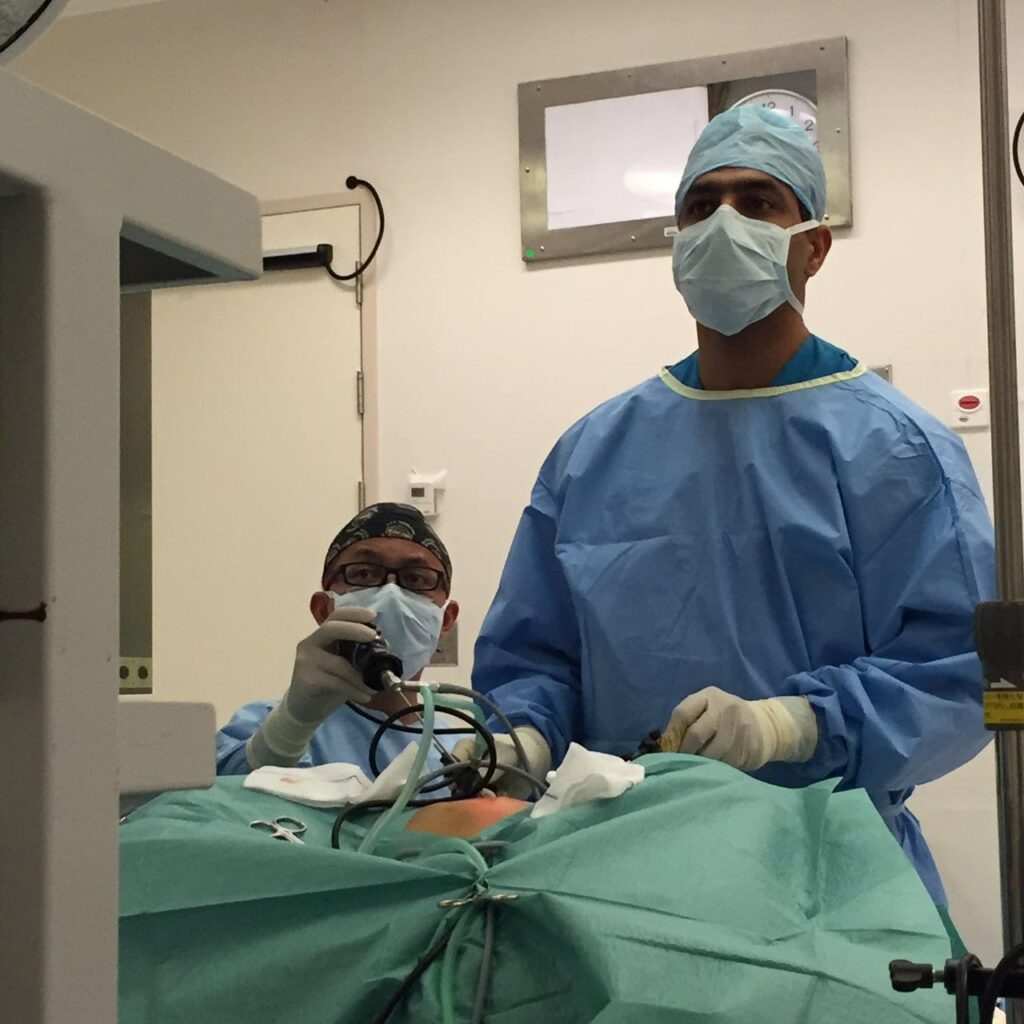
Paediatric Urology Conditions and Treatment
Posterior Urethral Valves
Posterior urethral valves (PUV) are abnormal tissue folds within the urethra that can obstruct the flow of urine in boys. The condition may be suspected before birth when an antenatal ultrasound shows findings such as a distended bladder or dilatation of the urinary tract.
After birth, a baby with PUV may have difficulty passing urine, a weak or abnormal urinary stream, bladder distension or urinary tract dilatation. The severity can vary, and some newborns require assessment and treatment soon after birth because urinary obstruction can affect the bladder and kidneys.
Diagnosis may involve ultrasound and a VCUG to examine the bladder and urethra. Additional investigations may be used to assess kidney function and the condition of the upper urinary tract.
Treatment is directed towards relieving the obstruction and supporting urinary tract function. After appropriate bladder drainage and stabilisation, endoscopic valve ablation may be performed. If a baby is too small or not clinically suitable for immediate valve ablation, temporary urinary drainage may be required before definitive treatment.
Because bladder and kidney problems can persist or develop over time in some children with PUV, follow-up may continue as the child grows.
01
Vesico-Ureteric Reflux
Vesico-ureteric reflux (VUR) occurs when urine flows backwards from the bladder towards one or both kidneys. The condition varies considerably in severity, and some children may have reflux without developing kidney damage or requiring an intervention.
VUR may be identified after a child develops a urinary tract infection, particularly when infections are recurrent or associated with fever. Some children may experience painful urination or other urinary symptoms, while others may have no obvious symptoms and are diagnosed following investigation of an abnormality in the urinary tract.
Assessment considers factors such as the grade of reflux, the child’s age, infection history, kidney appearance and function, bladder function and other urinary tract abnormalities. These findings help determine whether monitoring or active treatment is appropriate.
Not every child with VUR requires surgery. Depending on the clinical situation, management may involve observation, medical measures or an intervention. For selected children, endoscopic treatment such as Deflux injection may be considered. Children with persistent high-grade reflux or particular clinical findings may require another form of surgical correction.
02
Pelvi-Ureteric Junction Obstruction
Pelvi-ureteric junction (PUJ) obstruction occurs when urine does not drain normally from the renal pelvis into the ureter. This can lead to dilatation of the kidney’s collecting system, known as hydronephrosis, and in some cases may affect kidney function.
PUJ obstruction is often detected during pregnancy through antenatal ultrasound. Some children remain without noticeable symptoms, while others may develop abdominal or flank pain, urinary tract infections, nausea or vomiting.
Assessment commonly includes a renal and bladder ultrasound. Where further information is required, a diuretic renogram may be used to assess urine drainage and the function of the affected kidney. Other investigations, including VCUG, may be considered in selected children depending on the ultrasound findings and clinical presentation.
Surgery is not automatically required for every child with PUJ obstruction. The decision is based on the child’s symptoms, the progression of hydronephrosis, urine drainage and kidney function. Where significant obstruction or deterioration in renal function is established, pyeloplasty may be recommended to correct the narrowed junction. A laparoscopic approach may be considered for suitable children.
03
Hypospadias
Hypospadias is a congenital condition in boys in which the opening of the urethra is located on the underside of the penis rather than at the tip. The penis may also have a downward curvature, known as chordee, and the foreskin may form a hood around the head of the penis.
The appearance of hypospadias varies between children. Signs may include an abnormally positioned urinary opening, an unusual or spraying urinary stream and curvature of the penis. The degree of curvature and position of the urethral opening are considered when assessing the condition.
A physical examination is generally used to assess the anatomy and determine whether surgical correction may be appropriate. Where surgery is recommended, the technique depends on the location of the urethral opening, the degree of curvature and other anatomical findings.
If hypospadias is suspected, parents should have the child assessed before arranging circumcision. The foreskin may be required as part of some reconstructive procedures.
04
Signs That May Lead to a Paediatric Urology Assessment
The symptoms associated with paediatric urological conditions vary considerably. Some children may have recurrent urinary tract infections or fever associated with infection, while others may have difficulty passing urine, a weak urinary stream or an unusual pattern of urine flow.
Abdominal or flank pain, vomiting, genital swelling or an unusual appearance of the penis may also prompt further assessment. In babies, urinary problems may be less obvious and can include difficulty passing urine, changes in urine output or abdominal distension.
Some conditions, including certain forms of PUJ obstruction and posterior urethral valves, may first be suspected during pregnancy or after birth through ultrasound findings rather than symptoms. Therefore, the absence of noticeable symptoms does not necessarily exclude a urinary tract abnormality.
These signs can occur with different medical conditions and do not by themselves establish a diagnosis. An appropriate medical assessment is required to determine the underlying cause.
How Are Paediatric Urological Conditions Diagnosed?
The diagnostic process begins with an assessment of the child’s medical history, symptoms and previous investigations. A physical examination is then performed based on the condition being considered.
Urine tests may be used when infection or another urinary abnormality is suspected. Ultrasound can provide information about the kidneys, bladder and urinary tract, including findings such as hydronephrosis.
A VCUG may be used when assessment of the bladder and urethra is required, including in children being evaluated for posterior urethral valves or selected cases of vesico-ureteric reflux. Functional kidney investigations, such as a diuretic renogram, may be considered when information about urine drainage and kidney function is needed.
The investigations are selected according to the child’s clinical presentation. Not every child requires every test.
Paediatric Urology Assessment in 3 Steps
Step 1: Schedule an Appointment
The first step is to arrange a paediatric urology assessment in Kuala Lumpur, Selangor or elsewhere in Malaysia. Parents or caregivers can provide information about the child’s symptoms, previous diagnoses, medical history and any ultrasound, scan or laboratory results that are already available.
Step 2: Review the Assessment and Diagnosis
During the assessment, the child’s medical history, symptoms, examination findings and relevant investigation results are reviewed. Where further testing is required, the appropriate investigations can be discussed before a treatment plan is considered.
Step 3: Discuss Treatment Options
Once the clinical findings have been assessed, the appropriate management options can be discussed. Depending on the condition, this may involve observation and follow-up, medical management, an endoscopic procedure, reconstructive surgery, open surgery or a laparoscopic approach. The recommended option depends on the child’s individual diagnosis and clinical circumstances.
Treatment Options for Paediatric Urological Conditions
Treatment is based on the specific diagnosis and the findings from the child’s assessment. Observation and follow-up may be appropriate when an immediate intervention is not required. In other circumstances, treatment may involve medication, endoscopic procedures or reconstructive surgery.
For posterior urethral valves, treatment may involve endoscopic valve ablation after appropriate stabilisation and bladder drainage. Selected children with vesico-ureteric reflux may be considered for endoscopic Deflux injection or another form of surgical correction depending on the grade of reflux and other clinical findings.
Children with significant PUJ obstruction may be considered for pyeloplasty where assessment shows that surgical correction is appropriate. Hypospadias may require reconstructive surgery when the anatomical findings indicate that correction is needed.
The purpose, suitability and timing of treatment should be discussed with the child’s treating medical team after assessment.
When May Surgery Be Considered?
Surgery is not necessary for every paediatric urological condition. The decision depends on the child’s diagnosis, age, symptoms, anatomy, imaging findings and the function of the urinary system.
Surgical treatment may be considered when there is significant urinary obstruction, recurrent infections, deterioration in kidney or bladder function, significant anatomical abnormality or another clinical indication. Some procedures may be performed during infancy or early childhood, while other conditions can be monitored before intervention is considered.
Before an operation, parents or caregivers should be given information about the proposed procedure, its purpose, relevant alternatives, potential risks and the expected follow-up.
Laparoscopic and Keyhole Surgery
Laparoscopic surgery, also known as keyhole surgery, uses small incisions through which a camera and surgical instruments are introduced. In paediatric urology, this approach may be suitable for selected procedures.
Laparoscopic pyeloplasty, for example, may be considered for appropriate cases of PUJ obstruction. The choice between laparoscopic and open surgery depends on the child’s condition, anatomy, age, previous treatment and other clinical considerations.
Laparoscopic surgery is not appropriate for every child or every paediatric urological condition. The suitable surgical approach can be determined after assessment.
What Happens Before Treatment?
Before treatment is planned, the child’s diagnosis, examination findings and investigation results are reviewed. Parents or caregivers can discuss the reason for treatment, the proposed procedure, possible alternatives and relevant risks with the treating medical team.
The timing of treatment varies between conditions. Some children may require intervention during infancy or early childhood, whereas others may be monitored through regular assessments before treatment is considered.
Where surgery is recommended, the surgical approach and follow-up requirements are explained according to the child’s individual circumstances.
Recovery and Follow-Up
Recovery following paediatric urological treatment varies according to the condition, procedure, child’s age and general health. Endoscopic, laparoscopic and open procedures may involve different postoperative care.
Parents or caregivers will receive information about postoperative care, medication where required, activity restrictions and follow-up appointments. Some conditions require continued monitoring of kidney, bladder or urinary tract function after treatment.
Children treated for posterior urethral valves, in particular, may require ongoing assessment because bladder and kidney function can remain affected over time.
The treating medical team will advise parents about the type and frequency of follow-up appropriate for the child’s condition.
About Dr Nada Sudhakaran
Dr Nada Sudhakaran is a Consultant Paediatric Surgeon based in Kuala Lumpur, Malaysia. The areas of practice provided for this website include paediatric surgery, paediatric urology, reconstructive paediatric surgery and laparoscopic or keyhole surgery.
Dr Nada is listed as being on the specialist registers to practise Paediatric Surgery in the United Kingdom, Malaysia and Australia, based on the professional information supplied for this website.
The qualifications and registration details supplied are MBBS from the University of Wales, UK; MRCS from Glasgow, UK; FRCS in Paediatric Surgery from the Intercollegiate Board, UK; CCT in Paediatric Surgery from the General Medical Council, UK; FRACS in Paediatric Surgery from Australia; and National Specialist Register Malaysia No. 129809.
Paediatric urological conditions can vary significantly between children. Assessment, investigation and treatment are therefore considered according to the child’s individual clinical findings rather than applying the same treatment to every patient.
Frequently Asked Questions
Paediatric urology covers conditions affecting the urinary and genital systems in babies, children and adolescents. These may include posterior urethral valves, vesico-ureteric reflux, PUJ obstruction and hypospadias, among other conditions.
Yes. Some urinary tract abnormalities can be suspected during pregnancy through antenatal ultrasound. Findings involving the bladder, kidneys or urinary tract may lead to further assessment after birth. Posterior urethral valves and PUJ obstruction are examples of conditions that may be detected antenatally.
No. Some children with VUR can be monitored without surgery. Management depends on factors including the grade of reflux, infection history, kidney findings, bladder function and the child's clinical course. Intervention is considered only when the clinical findings support it.
Surgery may be considered when assessment demonstrates significant obstruction, progressive hydronephrosis, symptoms or deterioration in kidney function. Pyeloplasty is one surgical option when correction of the obstruction is indicated.
If hypospadias is suspected, the child should be assessed before circumcision. The foreskin may be required for certain reconstructive procedures.
No. Laparoscopic surgery is one surgical approach and may be considered for selected conditions and children. The appropriate approach depends on the child's diagnosis, anatomy, age and other clinical factors.

Paediatric Urology Assessment in Kuala Lumpur, Selangor and Malaysia
Parents or caregivers seeking assessment for a child’s urinary or genital condition can enquire about paediatric urology services with Dr Nada Sudhakaran in Kuala Lumpur, Selangor and Malaysia. The assessment can help determine whether further investigation, monitoring or treatment may be appropriate based on the child’s individual clinical findings.
Contact Dr Nada Sudhakaran to enquire about a paediatric urology assessment in Malaysia.